Egg sharing cuts Bristol’s IVF waiting list

egg donnor program

A new “egg sharing” programme and an increase in the amount egg donors are compensated have significantly cut waiting times for couples needing donor eggs in the West.

The Bristol Centre for Reproductive Medicine (BCRM) at Southmead Hospital says it has seen a rise in women registering as donors since a change in the law on compensation.

Egg and sperm donors: HFEA in drive to increase numbers

egg donor

The UK fertility regulator is seeking to reduce the taboo around egg and sperm donation.

The Human Fertilisation and Embryology Authority (HFEA) says people should feel the same about it as they do about altruistic, or living, organ donation.

It is launching a new drive to encourage more donors to come forward to help infertile couples have a child.

Department of Health seeks help for donor brief

egg donation

A tender worth up to £320,000 is up for grabs as the DH looks to combine key services for donors and spread awareness of its work.

A document seen by PRWeek reveals that efforts are under way to help those seeking infertility treatments by working ‘with media, social networking and other relevant parties to raise public awareness of the shortage of sperm, eggs and embryos’.

Ovulation

By Ana Crespillo

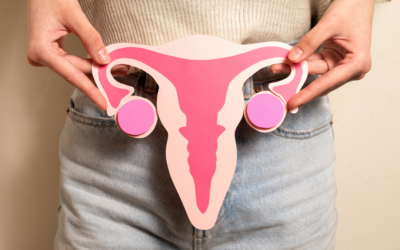
Ovulation is necessary for reproduction; it is influenced by a complex interplay of hormones in the pituitary gland, secreting the lutheinizing hormone (LH) and follicle-stimulating hormone (FSH). In response to FSH, follicles begin developing in the ovary but only one single, mature egg will be released when LH surges (ovulation). During the post-ovulatory phase, the ovum will travel through the fallopian tubes toward the uterus.

AMH

By Ana Crespillo

The Anti-Müllerian hormone (AMH) is involved in the regulation of sex hormones production; its changing levels (falling in females, rising in males) are implicated in the onset of puberty in both sexes. In women, it is expressed by granulosa cells of the ovary during the reproductive years; having an important role in the formation of primary follicles. Consequently, this hormone has been explored as a good predictor of a woman´s ovarian reserve due to its ability to be measured in blood throughout the menstrual cycle.

PGS and PGD

pgd

By Ana Crespillo

The prevention of genetic disease that may be present in the embryo either from spontaneous mutations or from disorders inherited from the parents can be addressed at the clinic performing an embryo biopsy followed by genetic analysis. Preimplantation genetic screening (PGS) is applied when the parents are known or assumed to be chromosomally normal but we want to guarantee the genetic normality of the embryo.

First person: ‘Egg donation was our last chance’

cigueña

I’ll never forget turning to my husband Andy and saying, ‘If we can’t have children, I’ll never put my body through fertility treatment.’ I was 30 and couldn’t understand that desperation to have a baby I’d seen in some women. Of course, I was speaking with the arrogance of someone who had never faced infertility. Those words would come back to haunt me.

Fast forward ten years, and I was sitting on a hotel bed in Spain with tears rolling down my face because I’d just been told by my Spanish fertility clinic that our two embryos ‘weren’t doing well’.

Fertility treatment waiting times halve after increased payments to donors

Egg donor

Many couples were faced with waits or two or more years with hundreds forced abroad for expensive and risky treatment where regulations are not as strict.

On October last year the fertility regulator changed the payment system to egg donors so they received a lump sum of almost £750.

Plea for egg donor: Sunraysia couple desperate to start own family

Like many young girls, Jane dreamed she would find her prince, get married and raise a family.

But her first two wishes came true later than she hoped, and now aged 44, time is running out for the fairytale ending: to have children.

Rights of donor children must come before egg donation compensation

Egg donation

University of Tasmania academic Meredith Nash recently argued on The Conversation that women who donate their eggs for fertility treatments should be financially compensated. It’s a risky and time-consuming process, she argued, which should be acknowledged financially. Compensation would also lead more women to donate their eggs and address the supply shortfall.